
The Greene County Most Wanted Program
The Greene County Sheriff's Office runs the county's official public program. Its site and mobile app carry a Most Wanted feature next to inmate information, alerts, and a tip form. Think of it as a spotlight, not a ledger. The sheriff picks which matters get attention, and the agency makes no claim that the feature covers every active arrest, bench, alias, or municipal warrant in Greene County. Use it the responsible way: open the official source, read the sheriff's current notice, and report what you know through that same channel. The sheriff decides what is published there, and only that office's page shows it. Nothing here reproduces names, photos, mugshots, addresses, or any roster. Anyone checking personal legal status should contact the issuing court rather than guess from a selective feature. The official sheriff landing page marks the public entry point for the Greene County program.
The image identifies the official agency setting without displaying or repeating any person's record.
Greene County Most Wanted Access
The feed is a program display, not a name-search database. There is no public search box for first name, last name, date of birth, warrant number, case number, court, type, or status. No sorting, export, or pagination appears either. That gap matters. A database matches a query against a body of warrant records. The Greene County most wanted feature instead shows items the sheriff selected for public notice. Open the official Most Wanted feed to see the sheriff's current program-level source.
This shows the structure of the official Greene County feature only, with no names, faces, or mugshots from the roster.
How the Lists Work
Every most-wanted feature is curated. The sheriff chooses which matters get public attention, while an active-warrant system may hold many more court orders that never surface in the feature. Greene County's published sources do not state the selection test, nor do they say how often entries are checked, posted, or removed. Promising a daily, weekly, or real-time update would be a guess, because no such cadence is published. Behind the scenes, a court issues a warrant and an authorized agency executes it. The issuing clerk later records a return, recall, or other court action. Those steps can happen on systems the public feature does not mirror at once. Alabama's internal Warrant Management System tracks statuses like Issued, Executed, Requested, Recalled, and Denied, but that system is not a public Greene County name lookup.
Most wanted selection → public sheriff notice → tip or law-enforcement action → court and agency status update. Each part has its own record keeper.
Note: Greene County publishes no update schedule, so only the issuing clerk and sheriff can confirm a warrant's current status.
Greene County Most Wanted App
The sheriff's app folds Most Wanted into a wider public-communication service. Its published navigation lists Inmates, Submit A Tip, and Alerts. Each label is a separate tool. Inmates covers custody information. Alerts carries agency notices. Submit A Tip takes information for authorities. None of this makes the app a complete Greene County warrant search, and a blank result in one section does not clear a court order held elsewhere. The official program navigation source documents those Greene County Sheriff features.
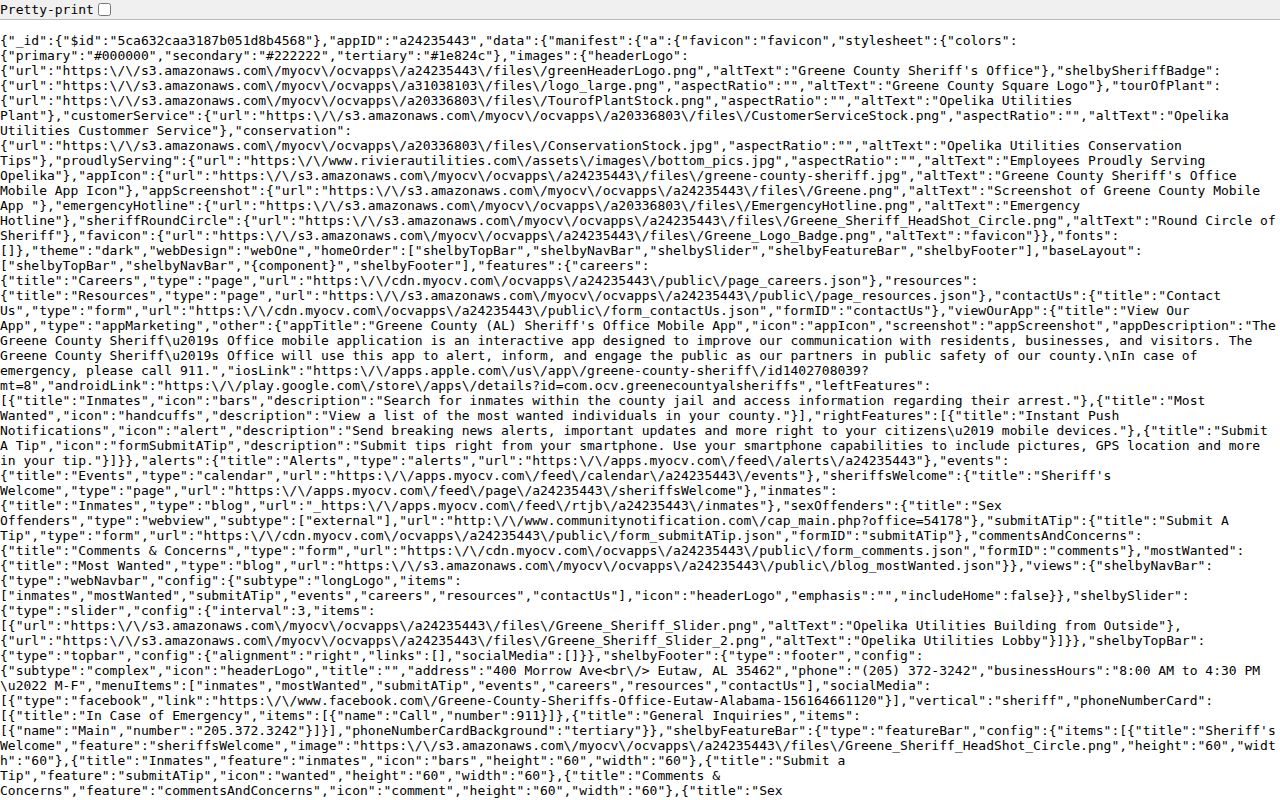
The program frame separates the sheriff's public services while keeping individual records off this page. The official Greene County Sheriff AL app listing also describes the public feature set.
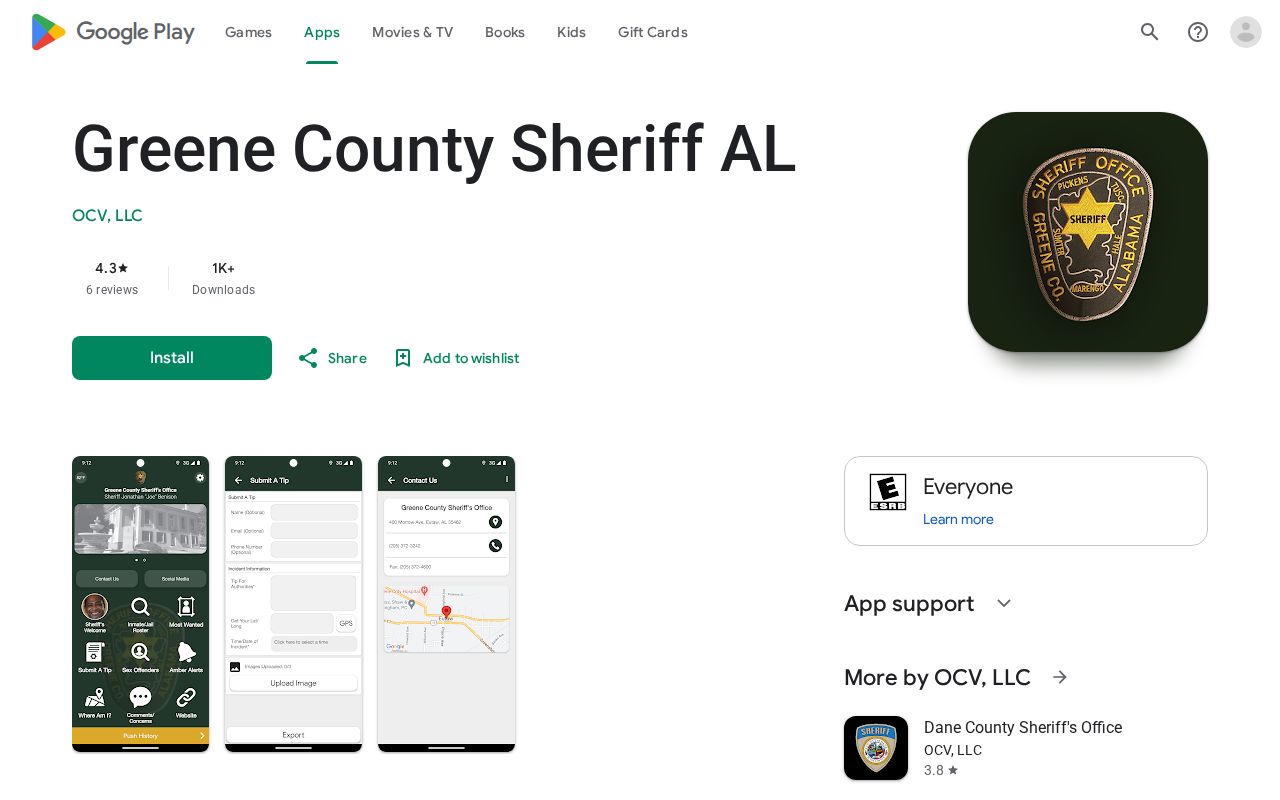
The app listing confirms the official distribution channel. It does not promise that every Greene County warrant appears inside the app.
How to Report a Tip Safely
The Greene County Sheriff app includes an official Submit A Tip form. Name, Email, and Phone Number are all optional on it. The form does require the tip itself, plus the time and date of the incident. A location control can capture latitude and longitude. Share only what is relevant and accurate. Never confront, follow, detain, or try to serve anyone.
- Open the sheriff's official tip form, not a copied roster or an unofficial social post.
- Describe the information for authorities and provide the required incident time and date.
- Add contact details only if you choose, since those fields are listed as optional.
- For a crime in progress or another emergency, stop using the form and call 911.
The official Greene County tip-form source shows the fields and its ongoing-investigation warning.
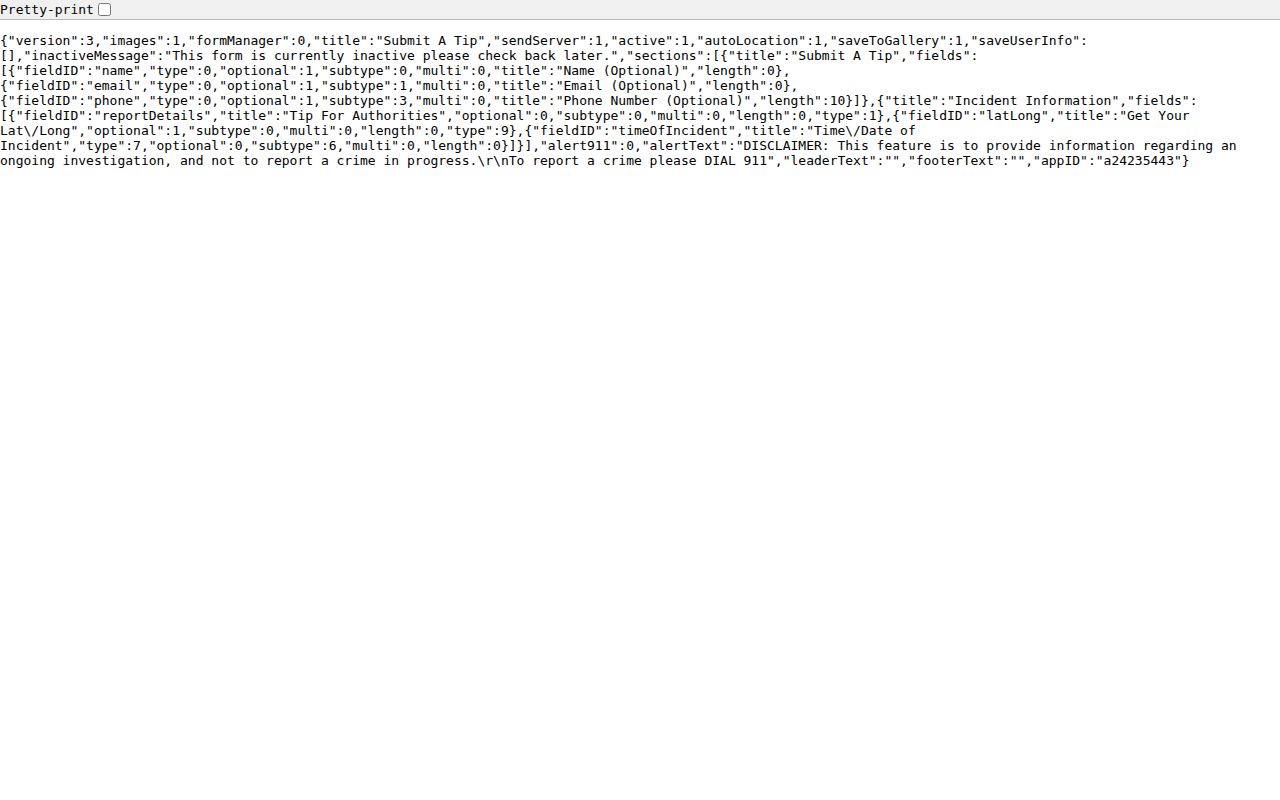
The form exists for information tied to an ongoing investigation. Its own notice sends emergencies and crimes in progress to 911.
Key Point: Greene County publishes no separate reward amount or payment method; use the sheriff's form for tips and call 911 for emergencies.
Greene County Most Wanted Limits
The sheriff's main public line is (205) 372-3242. That one number is what Greene County publishes. There is no separate most-wanted tip line and no warrant-division direct number. No Crime Stoppers chapter operates in Greene County, and no anonymous reward process exists. The county posts no fugitive-of-the-week schedule, no roundup calendar, and no task-force partner list. No cash reward amount appears anywhere. Greene County also runs no amnesty or safe-surrender event right now. A short-term program could still be announced later, so ask the issuing court about any current option. Until then, the ordinary route applies. Identify the court, confirm the warrant, and ask what the judge requires. Bring in counsel whenever surrender or a serious charge is involved.
- Curated
- Selected for public attention rather than drawn from every open record.
- Active warrant
- A court order not shown as executed, recalled, or otherwise closed.
- Recall
- An action by the issuing court that withdraws a warrant.
- Return
- The service result sent back to the issuing clerk.
Most Wanted vs an Active Warrant
Don't swap the two terms. Greene County's most-wanted feature is a public program the sheriff runs through official channels. An active warrant is different. It is a court and law-enforcement record that stays open until a closing event such as execution or recall. Plenty of active warrants never get any public feature at all. A featured case can also change after publication, so verify its current status with the agency and the issuing court.
| Feature | Most Wanted program | Active warrant record |
|---|---|---|
| Scope | Selected sheriff notices | Any warrant still open in its system |
| Public access | Official app or feed | Issuing clerk or responsible agency |
| Search fields | No public Greene search form found | Case identifiers depend on the court |
| Status check | Sheriff plus issuing court | Issuing court, then serving agency |
| Resolution | Not resolved through the public feature | Court-approved appearance, recall, bond, or other action |
Want a fuller picture of open records? The Greene County active warrants reference covers the broader ground, and the court holding each file confirms the specific case.
Confirm Greene County Warrant Status
Missing from the most wanted feed proves little. A warrant can be new, sealed, or held by a municipal court. It may be a juvenile or youthful-offender matter, await a system update, or simply sit outside what the sheriff chose to feature. Eutaw and Forkland offer ticket and case-payment portals. Neither counts as a warrant roster. Alabama runs an internal statewide warrant system, but there is no public statewide name-search page. Greene County gives you better doors to knock on. For Circuit Court of Alabama, 17th Judicial Circuit, or Greene County District Court matters, start with the Greene County Circuit Clerk at (205) 372-3598. The clerk keeps those files. For an Eutaw or Forkland municipal case, begin with that municipal clerk instead. When the public channel cannot answer a narrow question, request a search or a releasable copy from the record custodian. Call the Greene County Sheriff at (205) 372-3242 or the jail at (205) 372-3152 only after the court identifies the record, since those offices handle service, intake, and surrender logistics. Ask for the case number, the exact warrant label, the issuing court, and the issue date. Get the present status too. Greene County publishes no local warrant-number format and no bond schedule. Bond amounts and appearance instructions must come from the case itself.
If You Believe You Are on a List
Don't treat the Greene County most wanted feed as the final word on your own status. A listing is only a starting point. Call an attorney if the accusation is serious, unclear, outside the county, or likely to involve surrender. Counsel can contact the issuing court directly. Counsel can ask whether the warrant is active and whether bond is set. Counsel can also seek a walk-through, a recall, or a court-approved appearance. Recall clears the warrant. It does not dismiss the case behind it. Without a lawyer, phone the issuing clerk before going to the sheriff or the jail. Ask what document is active and what step the judge requires. If surrender is required, call the Greene County Sheriff and the jail for the current intake location, identification rules, timing, and bond process. Greene County publishes no walk-in hours or standard surrender protocol, so confirm everything in advance.
Important: Confirm the Greene County warrant through counsel or the issuing court, and arrange any voluntary surrender before approaching a law-enforcement office.
Greene County Most Wanted Records
Public access has limits. The Alabama Open Records Law lets citizens see public writings unless another law creates an exception. Even so, it does not make every warrant detail public at every stage. Juvenile law-enforcement records carry statutory protection. Youthful-offender photographs and fingerprints have access limits. So do other youthful-offender records. A sealed warrant or an active-investigation record may be withheld or redacted. The feed itself is no warrant-record inventory. It offers a title, narrative material, an image slot, a publication date, and feed status metadata. No warrant number appears there. Nor a case number, bond, issuing court, judge, charge class, serving agency, full date of birth, or status-change date. Those gaps are one more reason not to treat the feed as a court docket. Alabama Code section 41-9-627 requires criminal-justice agencies to report certain unserved, served, and withdrawn arrest-warrant information to ALEA. That state duty supports official justice work. It creates no public statewide Greene County warrant search. In Greene County, pair the sheriff's current public program with direct confirmation from the court that created the warrant record.